
Understanding Uterine Fibroids and Their Impact on Reproductive Health
Looking for fibroid treatment in dubai? Uterine fibroids (also known as leiomyomas or myomas) are non-cancerous muscular tumors that grow within or along the walls of the uterus. They are extraordinarily common, affecting up to 70% of women of reproductive age worldwide. While some women carry fibroids without experiencing any physical discomfort, millions endure chronic pelvic pain, unusually heavy or prolonged menstrual bleeding, iron-deficiency anemia, lower back pressure, frequent urination, and painful intercourse.
Beyond day-to-day physical pain and disruption, fibroids are a primary contributor to female reproductive challenges and pregnancy complications. Depending on their size, number, and precise anatomical position, fibroids can alter the uterine cavity contour, block the fallopian tubes, impede sperm transport, and hinder healthy embryo implantation. Choosing a timely, personalized strategy for fibroid treatment in dubai is critical for relieving chronic symptoms while safeguarding your long-term fertility and uterine structural integrity.
When evaluated by an experienced specialist, fibroids do not have to mean accepting permanent pain or giving up on your dream of biological motherhood. Dr. Sunita Arora, a leading Specialist Obstetrician, Gynecologist, and Reproductive Medicine Expert in Dubai practicing at JTS Medical Centre and Dubai London Hospital, provides compassionate, state-of-the-art care tailored to each patient’s reproductive goals, symptoms, and lifestyle.
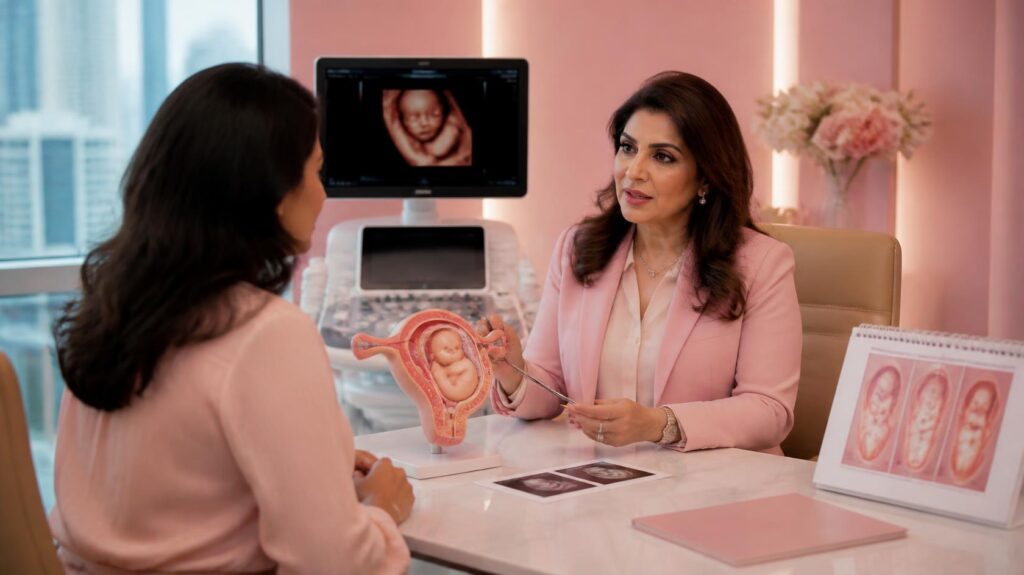
Classification of Uterine Fibroids and Their Distinct Clinical Complications
Fibroids present in various sizes—ranging from tiny, microscopic seedlings to large, bulky masses that enlarge the uterus. Clinically, fibroids are classified into three primary types based on their location within the uterine tissue layers:
- Submucosal Fibroids: These grow just beneath the inner lining of the uterine cavity (endometrium) and bulge into the uterine space. Submucosal fibroids are the most direct cause of severe, clot-heavy menstrual bleeding and carry the highest risk of causing infertility and recurrent early miscarriages by preventing proper embryo implantation.
- Intramural Fibroids: These develop within the thick muscular wall of the uterus (myometrium). As they expand, intramural fibroids distort the shape of the uterine wall, cause heavy periods, create deep pelvic pressure, and can alter uterine contractility during early pregnancy.
- Subserosal Fibroids: These form on the outer wall of the uterus and project into the pelvic cavity. They frequently press against adjacent organs like the bladder or rectum, leading to frequent urination, chronic constipation, pelvic fullness, and abdominal bloating.
If left unmanaged, rapidly growing fibroids can cause severe chronic anemia due to excessive blood loss, leading to systemic fatigue, heart palpitations, and general weakness. Furthermore, fibroids during pregnancy can increase the risk of localized severe pain (red degeneration), fetal growth restriction, placenta previa, and premature labor. Seeking specialized fibroid treatment in dubai helps detect these growths early and prevents progressive reproductive complications.
“A fibroid diagnosis should never be treated with a rigid, one-size-fits-all approach. For a young woman wishing to conceive, preserving uterine health via precision fertility-sparing myomectomy is entirely different from managing asymptomatic fibroids. Effective fibroid treatment in dubai focuses on personalized, organ-preserving strategies that protect future fertility while restoring absolute comfort and peace of mind.”
American Board of Cosmetic Gynecology (ABCG)
Clinical Workflow: Comprehensive Fibroid Evaluation and Surgical Management
- Detailed Clinical Assessment & Pelvic Diagnostic Imaging: The diagnostic process begins with a thorough evaluation of your menstrual history, bleeding patterns, and pain levels. High-resolution 3D transvaginal or pelvic ultrasound mapping is performed to pinpoint the exact count, size, volume, and depth of each fibroid within the myometrium.
- Specialized Cavity Evaluation: If submucosal fibroids or endometrial cavity distortion are suspected, a diagnostic office hysteroscopy or saline-infusion sonography (SIS) is conducted to directly visualize the uterine cavity contour and confirm mucosal health.
- Customized Therapeutic Selection: Based on your symptoms, age, and pregnancy plans, Dr. Sunita Arora formulates a dedicated care plan. Options range from hormonal medical management (GnRH analogues or selective progesterone receptor modulators) to shrink lesions, to fertility-preserving laparoscopic or hysteroscopic surgery.
- Precision Minimally Invasive Myomectomy: When surgery is required, laparoscopic or hysteroscopic myomectomy is performed using micro-instruments. The fibroids are meticulously enucleated and extracted through tiny keyhole incisions while multi-layer uterine reconstruction ensures maximum uterine wall strength for future pregnancy.
- Post-Operative Rehabilitation & Conception Guidance: Patients experience rapid healing and minimal downtime. Detailed recovery protocols are provided, along with clear timelines for when it is entirely safe to attempt natural conception or proceed with assisted reproductive treatments.

Frequently Asked Questions
No, a myomectomy is specifically designed as a uterine-preserving, fertility-enhancing procedure. By removing fibroids that distort the uterine cavity or block the fallopian tubes, surgery significantly improves your chances of natural conception and healthy embryo implantation. Dr. Sunita Arora uses advanced micro-suturing techniques to ensure the uterine wall heals strongly, supporting future pregnancy.
Hormonal medications can temporarily shrink fibroids, reduce heavy menstrual bleeding, and improve anemia before surgery. However, medications do not permanently eliminate fibroids. Once medical therapy is discontinued, fibroids often regrow. For long-term symptom relief and fertility preservation, surgical options like laparoscopic or hysteroscopic myomectomy remain the gold standard.
Reclaim Your Comfort, Hormonal Balance, and Reproductive Potential
Living with severe pelvic pain, unpredictable heavy bleeding, or the emotional heartbreak of unexplained fertility delays due to fibroids is not something you have to endure. Modern gynaecological medicine offers safe, gentle, and highly effective options designed to preserve your body and restore your vitality.
Choosing a dedicated specialist ensures your care is anchored in clinical excellence, organ preservation, and genuine empathy. Dr. Sunita Arora brings over two decades of premier obstetric, gynaecological, and fertility expertise to women seeking fibroid treatment in dubai. Holding prestigious international accreditations, including MRCOG (UK) and MRCPI (Ireland), Dr. Arora provides world-class surgical precision and compassionate care at JTS Medical Centre and Dubai London Hospital.
Take charge of your health and future family planning today. Schedule your comprehensive fibroid evaluation with Dr. Sunita Arora in Dubai and begin your journey toward lasting health.


